

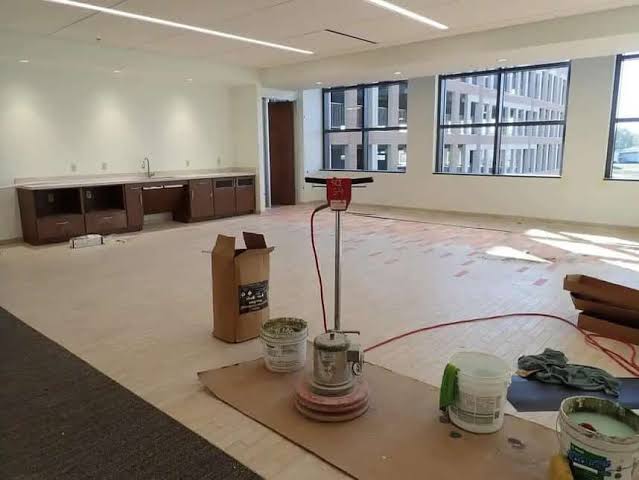
Post construction cleaning gets treated as the last line on a schedule and the first thing squeezed when a project runs late. That is a mistake with a predictable outcome: a handover walkthrough where the client sees haze on the tile, dust on every horizontal surface above eye level, and adhesive shadows on the glass, and forms an opinion about the whole build from the last two hours of it.
It is also a genuinely technical job. Construction residue is not household soil, and treating it as though it were is why some spaces need cleaning three times.
Three phases, not one clean
Any commercial fit out worth doing properly has three cleaning events, and they serve different purposes.
Rough clean. During construction, once the bulk of the mess making trades are through. Debris removal, gross dust knockdown, sweeping and vacuuming so the following trades are working in a usable space. This is about site condition rather than appearance.
Interim or pre punch clean. After finishes are installed and before the punch walk. Surfaces get properly cleaned so defects become visible. A punch list produced over a dusty floor misses things, and every missed defect becomes a warranty call later.
Final clean. After punch items are corrected, immediately before handover or occupancy. Detail level: glass, fixtures, hardware, interior of cabinetry, light lenses, vents, and the floors done last.
Projects that budget for one clean instead of three end up paying for two anyway, usually as an emergency re clean the night before a client walk.
Construction dust behaves differently
Three things about it that matter.
Gypsum dust from drywall sanding is extremely fine, alkaline, and it goes everywhere. It settles into every horizontal surface, into door tracks, on top of frames, inside ductwork, and on the tops of light fixtures where nobody looks until the lights are on and the shadows show. It also reacts badly with water applied casually, turning to a slurry that gets pushed around rather than removed.
Concrete dust is abrasive. Dry sweeping it across a new finished floor scratches that floor. Cutting and grinding concrete also generates respirable crystalline silica, which is subject to workplace exposure controls and dust suppression requirements. That is a contractor safety obligation on site rather than a cleaning decision, but it is worth knowing that the residue left behind is a different material from ordinary dust.
Then there is the residue category: joint compound splatter, paint overspray, adhesive from labels and protective film, tape residue on new finishes, mortar and grout haze on tile, and sealant smears on glass. Each of these needs a specific approach, and several of them will damage the surface underneath if the wrong product is used.
Sequence decides cost
The most expensive mistake is cleaning too early.
Clean before the ceiling grid is finished and you clean again. Clean before the HVAC system has been run and balanced, and the first time the system comes on it distributes construction dust from the ductwork across everything you just finished. Clean the floors before the last of the punch work is done and you have protected nothing.
The sensible order is: mechanical systems run and filters changed, ceilings and high surfaces first, walls and fixtures, glass, then floors last. Gravity is not negotiable, and every crew that cleans floors first learns this once.
Surface by surface
New porcelain and ceramic tile. Grout haze is a cementitious film left after grouting and it needs an appropriate haze remover, applied and neutralized properly. On glazed porcelain that is straightforward. On natural stone it is not, because acidic haze removers etch calcite based stone and the damage is permanent. Identify the material before anybody opens a bottle. The general principle that surface residue needs chemistry rather than effort is the same one covered in why mopping is not enough on tile and grout.
New vinyl composition tile. Comes with a factory applied protective coating that is not a floor finish. Standard practice is an initial clean and, where the specification calls for it, multiple coats of floor finish before occupancy. Getting this done before furniture lands is far easier than doing it afterwards.
Luxury vinyl. Usually needs no coating at all, and applying one creates a maintenance obligation the building never needed. Check the specification rather than assuming it behaves like vinyl composition tile.
Sealed and polished concrete. Neutral cleaning only. Aggressive chemistry on a new densified polished slab can undo work that cost a lot to do.
Glass. Protective film adhesive and sealant smears, not dirt. Scrapers used carelessly on coated or tempered glass leave marks that cannot be polished out, so this is a job for someone who knows the difference.
New soft flooring. Usually needs a thorough extraction of construction dust that vacuuming alone does not lift, timed after all other trades are finished.
The Anchorage variables
Winter construction here changes several things at once.
Temporary heat runs for months on a winter build. Direct fired units add moisture and combustion residue to the interior, and the air movement they generate keeps dust circulating rather than settling. Cleaning a space while temporary heat is still running is cleaning a moving target, so the final clean wants to follow the changeover to permanent systems.
Frozen ground and thaw cycles mean mud and grit come in on every pair of boots regardless of how much matting is at the door. On a nearly finished space, that means protection of finished floors right up to handover, and it means the final clean genuinely has to be final in sequence.
Dry indoor air behaves differently too. Heated air in an Anchorage winter is extremely dry, often down in the teens for relative humidity, and fine dust stays airborne longer in dry air before settling. A space that looked clean at ten in the evening can have a visible film by morning. High efficiency filtration and letting the space settle before the final detail pass are worth the time.
Schedule compression is the other reality. Projects race freeze up and shipping windows, and cleaning is at the end of a chain that has already absorbed every delay upstream. Booking the cleaning contractor early, with agreed phase dates that move together with the construction schedule rather than being fixed, is the practical defense.
Handover
Worth doing formally. A walk through with the general contractor or owner’s representative, a defect list if there is one, and a re clean of anything identified. Photographic records of the completed space are useful, particularly where a space sits empty for a period between handover and occupancy, because dust settles in an empty building and someone will ask why.
The other thing worth agreeing at handover is what happens next. A newly finished floor is at its most protectable on day one, and the maintenance program that starts in week one determines how it looks in year three. That is a different conversation from the construction clean, and it belongs under contract services.
The wider range of what we do for commercial buildings sits under commercial services. Where a floor is already past the point cleaning can recover, the framework in cleaning against replacement applies. We have been working in Anchorage buildings since 1976, which is covered on our about page and in how professional cleaning has changed over fifty years. To discuss a project schedule, get in touch.
Frequently asked questions
What are the phases of post construction cleaning?
Three. A rough clean during construction to remove debris and gross dust, an interim clean after finishes are installed so the punch walk happens over clean surfaces, and a final detail clean after punch corrections and immediately before handover. Budgeting for one clean usually results in paying for two.
Why is construction dust harder to remove than normal dust?
Because it is finer, more pervasive and chemically different. Gypsum dust is alkaline and turns to slurry when water is applied casually. Concrete dust is abrasive and scratches new finishes if it is dry swept. Add adhesive, paint overspray, grout haze and sealant residue and you have several distinct materials that each need their own approach.
When should the final clean be scheduled?
After punch corrections are complete, after mechanical systems have been run and filters changed, and on a winter project after the changeover from temporary heat to permanent systems. Cleaning while temporary heat is still circulating dust means cleaning the same space twice.
Can grout haze be removed after tile is installed?
Yes, with an appropriate haze remover applied and neutralized correctly. The material matters: acidic products suitable for glazed porcelain will etch marble, travertine and limestone permanently. Identifying the surface before anything is applied is the whole job.
Does new vinyl composition tile need finish before handover?
Where the specification calls for it, yes. New vinyl composition tile arrives with a factory protective coating rather than a floor finish, and applying finish before furniture and occupancy is considerably easier than doing it later. Luxury vinyl usually needs no coating at all, so check which product was installed.