

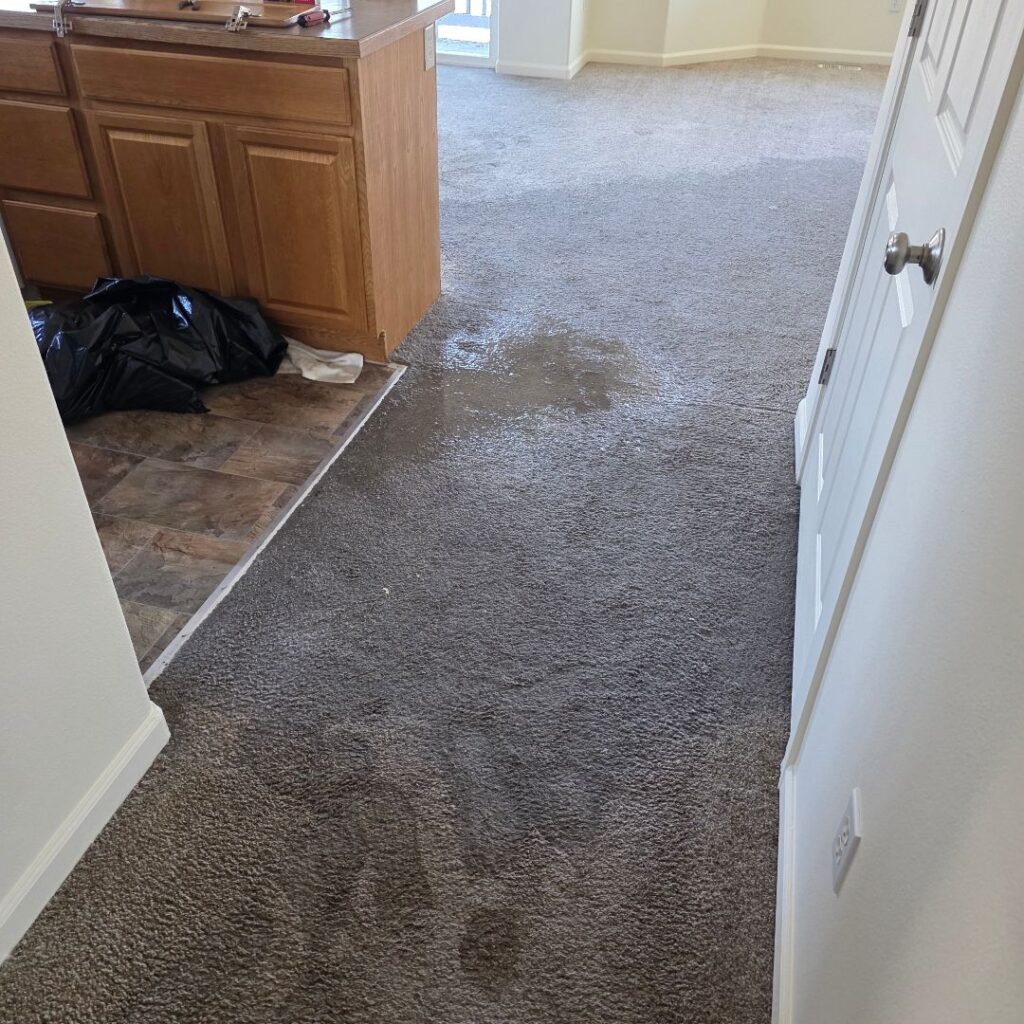
The outcome of a water loss is mostly decided on day one. Not by how much water came out, but by how fast it was contained, how quickly air movement started, and whether anyone documented the scene before things got moved. Water damage restoration in Anchorage runs on a clock, and the clock starts the moment you notice.
What follows is the first day, in order. Some of it you do. Some of it a restoration crew does. Knowing which is which is most of the value.
The first fifteen minutes: safety, then the source
Electricity first. If water has reached outlets, a panel, or is standing anywhere near an appliance you would have to walk through water to reach, do not go in. Kill the circuit at the panel if you can reach the panel dry, and if you cannot, call an electrician or the utility before you go any further.
Then the source. Find the shutoff and close it. If you do not know where your main shutoff is, this is the moment you will regret it, so find it on a quiet afternoon instead. In Anchorage homes the main is often in a crawlspace or utility room, sometimes behind stored boxes that have to be moved first.
For a burst supply line in winter, closing the main is only half the job. Open the lowest faucet in the house to drain the pressurized water in the lines, or it keeps coming out of the break.
Fifteen minutes to one hour: document, then call
Before you move a single thing, photograph and video the scene. Wide shots of each affected room, then closer shots of standing water, wet walls, wet contents and the failure point itself. Photograph the failed component before anybody replaces it, because that component is often the single most important piece of evidence about what happened.
Then make the call. A restoration crew that arrives in hours rather than days changes what can be saved, and in this town winter callouts are common enough that most firms are set up for them. We handle emergency response through flood and water restoration, and it is worth calling even if you are not yet sure how bad it is. A crew can tell you in ten minutes whether you have a mop up or a project.
While you wait, do the useful low risk things. Lift curtains and upholstery skirts off wet flooring. Put foil or blocks under furniture legs so the finish does not bleed into flooring. Move contents out of the wet area if you can do it without carrying water into dry rooms. Do not start pulling up flooring or opening walls, because that changes the scene before it has been assessed.
What Anchorage water losses usually are
Four causes account for the bulk of what we see, and each behaves differently on day one.
Frozen and burst supply lines. Deep winter, usually on a line running through an exterior wall, an unheated garage, a crawlspace or a vacant property with the heat set back. The water is clean at the point of failure but it has often been running for hours before anybody noticed, so the volume is large.
Water heater failure. Anchorage water heaters frequently sit in garages or utility spaces. Tank failure releases the full tank at once, then keeps refilling until the supply is shut.
Appliance supply lines. Washing machine hoses, dishwasher lines, fridge ice maker lines. Slow, hidden, and often discovered by a stain on a ceiling below rather than by water on the floor.
Breakup and groundwater. Spring melt against a foundation, blocked or frozen drainage, meltwater finding its way into a crawlspace or basement. Seasonal, predictable, and the one homeowners most often try to handle themselves.
The category of the water matters enormously for what can be saved and how the job is run, which is a topic in its own right. What one type of loss has in common with another is covered in the difference between flood and water damage restoration.
Hour one to four: extraction
Bulk water removal comes first because every gallon extracted is a gallon that does not have to be evaporated later. Portable and truck mounted extraction units pull standing water out of flooring and, where the assembly allows it, from beneath it.
This is the stage where a technician makes the calls that determine the length of the job. Whether flooring stays or goes. Whether the pad beneath it can be dried in place or has to come out. Whether baseboards come off so wall cavities can be reached. Whether drywall gets cut, and if so at what height. Those decisions are based on moisture readings, not on appearance.
Moisture meters and thermal imaging are used at this stage because the visible wet area is almost never the actual wet area. Water travels along the underside of subfloor, through wall plates and into cavities you cannot see. That gap between what is visible and what is wet is exactly the point made in hidden moisture rather than visible water.
Hour four to twelve: the drying system goes in
Drying is not fans. Drying is a designed system with three components working together.
Air movers break the boundary layer of saturated air sitting on wet surfaces so evaporation can continue. Placement and angle matter, and a room with the right number of air movers pointed wrong dries slowly.
Dehumidifiers remove the moisture the air movers have put into the air. Without them, all the air movers do is move humid air around and push it into other parts of the house. This is the single most common failure of a homeowner attempt.
Containment and heat keep the drying chamber separate from the rest of the house and keep the air warm enough for evaporation to proceed at a useful rate.
The Anchorage variable here is genuinely favourable. Outdoor air in deep winter holds almost no moisture, and indoor relative humidity in a heated home is often down in the teens. That dry air is an asset. In summer, when the outside air is carrying more moisture, drying the same structure takes longer.
The counterweight is temperature. Crawlspaces, garages and unheated spaces can be cold enough that evaporation slows to nearly nothing, and drying those areas means adding heat before anything else will work.
Hour twelve to twenty four: the first readings
By the end of the first day, the crew should have baseline moisture readings recorded for every affected material, including unaffected reference areas of the same material so there is something to dry back to. Those numbers are the file. Without them, nobody can prove later that the structure reached a dry standard.
Expect equipment to run continuously for several days. Three to five days is typical for a contained loss on the main floor. Longer where water reached a crawlspace, a wall cavity or a subfloor assembly with limited airflow. Nothing about that timeline is improved by turning the equipment off because it is noisy.
Daily monitoring readings follow. The job is finished when materials reach a documented dry standard, not when the surfaces feel dry to a hand.
The things people get wrong on day one
Waiting to see if it dries by itself. It will not, and the delay is the expensive part.
Running a household box fan into a closed room with no dehumidification, which relocates moisture rather than removing it.
Turning the heat off to save money while equipment runs. Evaporation needs warmth, and this is Alaska.
Throwing away the failed part before it is photographed.
Reinstalling flooring or closing a wall before the cavity behind it has documented readings. That is how a small loss becomes a much bigger one three months later.
The short version of the immediate steps is set out in what to do with water damage. For the structural repair side once drying is complete, see flood damage repair and restoration, and more of our restoration writing sits in the restoration archive. If you have water in the house right now, reach us here or call (907) 215-2503.
Frequently asked questions
How quickly does drying need to start after water damage?
As close to immediately as the situation allows. Materials continue absorbing for as long as water is in contact with them, and the difference between equipment arriving in hours and equipment arriving in days is often the difference between drying flooring in place and removing it.
Should I turn off the electricity myself?
Only if you can reach the panel without walking through or standing in water. If the panel is in the affected area, or you are unsure, call an electrician or the utility. No amount of saved flooring is worth the alternative.
Can I dry a room out myself with fans?
Fans alone move humid air into other parts of the house rather than removing moisture from the building. Effective drying needs air movement and dehumidification working together in a contained space, with measurements to confirm materials are actually drying rather than feeling dry.
What should I photograph before anything gets moved?
Wide shots of each affected room, closer shots of standing water and wet materials, the failure point itself, and the failed component before anyone replaces it. Photograph contents that were damaged where they sit. Time stamped images taken before cleanup are far more useful than anything captured afterwards.
How long will drying equipment need to run?
Three to five days is typical for a contained loss on a main floor, longer where water reached a crawlspace, wall cavity or subfloor with restricted airflow. The equipment comes out when documented moisture readings reach a dry standard, not on a fixed schedule.