

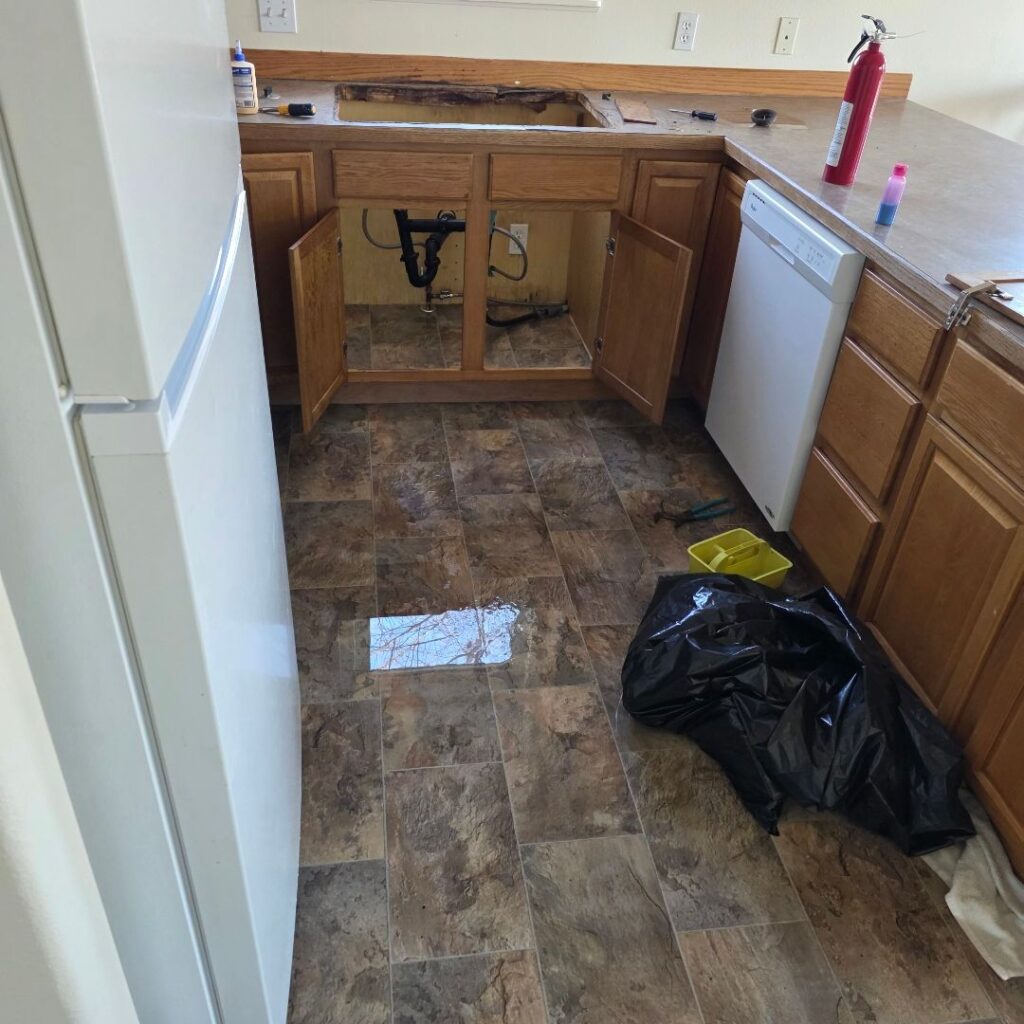
A water damage insurance claim is a paperwork exercise conducted under time pressure by someone who has just had a bad day. Most of the friction that follows is not about whether the water happened. It is about whether anybody wrote down what condition things were in, what was done, and why.
A restoration firm produces a specific set of records as a normal part of doing the work. Knowing what those records are, and what they are not, makes the process considerably less opaque.
One boundary first, and it is a real one. A restoration contractor is not your insurer, not an adjuster, and not a lawyer. What is covered, to what limit, with what deductible, is determined entirely by your policy and your carrier. Nothing here is legal advice, coverage advice, or a statement about what any particular claim will pay. It describes documentation practice in general terms only.
Why documentation carries the whole thing
An adjuster is generally working from a file rather than from the building. By the time a claim is reviewed, the water is gone, the equipment has been collected and the room may already look normal. The file is the only remaining evidence that anything happened.
That is why a firm that documents thoroughly is worth more than one that works fast and writes nothing down. Speed matters for the building. Records matter for the claim.
What gets recorded at first response
The first visit generates the highest value documentation because it captures the scene before mitigation changes it.
Time and date of the call and of arrival on site. Wide photographs and video of every affected area before anything is moved or extracted. Closer images of standing water, wet materials, affected contents and the failure point itself. Where the source is a component that will be replaced, that component photographed in place.
Then observations of what appears to have happened. A restoration technician records what is observed, which is not the same as a formal cause determination by an engineer or investigator. That distinction matters, and a firm that blurs it is overstating what it can support.
Affected areas get measured and sketched, room by room, with dimensions. That diagram becomes the basis for the scope of work later, and it is the document most often missing from a thin file.
Category, class and why they appear on the paperwork
Restoration work uses standard designations for the type of water involved and for the extent of the loss. Those designations drive what materials can be dried in place, what must be removed, and how the site is controlled. They also appear on the documentation because they explain why the scope of work looks the way it does.
An adjuster reviewing a file where flooring and drywall were removed will look for the reasoning. A designation recorded on day one, supported by observations and photographs, is that reasoning. Applied afterwards to justify a decision already made, it carries much less weight.
The drying file
This is the part homeowners rarely see and the part that does most of the work in a claim.
An equipment log records what was placed, where it was placed, when it went in and when it came out. Run hours are recorded per unit, because equipment charges in a restoration scope are generally calculated per unit per day.
Daily monitoring readings record the moisture content of affected materials, alongside reference readings from unaffected areas of the same material so there is a defined target. Temperature and relative humidity inside the drying chamber get logged too, and often the outdoor conditions as well, which in an Anchorage winter is genuinely relevant to explaining a drying curve.
Photographs continue through the job: at demolition, during drying, at completion. The set demonstrates progression rather than just a beginning and an end.
When materials come out, what came out and why gets recorded before disposal. Removed materials are frequently photographed with a measure in frame.
The relationship between what was visible and what was actually wet is usually the crux of any question about scope, which is the point made in hidden moisture rather than visible water.
The scope of work
Restoration scopes are typically written in an industry standard estimating format that carriers recognize, itemized by room and by task. That format exists so an adjuster can review a scope line by line against their own understanding of the loss.
Where a firm and a carrier disagree, it is nearly always about scope rather than about legitimacy. Common areas of discussion include how long drying equipment ran, whether a floor covering could have been dried in place rather than replaced, how far a removal needed to extend, and how much of an adjoining area was affected. Those are conversations that go better with readings attached.
Completion documentation
At the end, a firm generally issues a completion record stating that monitored materials reached a documented dry standard, with the final readings attached. Where third party verification was involved, that report is separate and comes from the independent party rather than from the contractor.
Keep that completion record. It is the document that answers a question years later about the condition a building was left in, which comes up on sale, on refinancing, and on any subsequent claim in the same area of the house.
What the homeowner should be doing in parallel
Report the loss to your carrier promptly and follow whatever process they set out. Policies commonly include a duty on the insured to take reasonable steps to prevent further damage after a loss, which is a general feature of property insurance rather than a promise about your specific policy. Your policy documents and your carrier are the authority on what applies to you.
Keep a written log of every conversation with the carrier: date, time, who you spoke to, what was said. Nobody enjoys doing this and everybody who has needed it is glad they did.
Keep receipts for anything you spend as a result of the loss, including temporary accommodation, replacement necessities and any work you paid for directly.
Do not dispose of damaged items before they are documented. Photograph them, and where practical keep the failed component itself somewhere dry.
Ask early what your adjuster wants. Requirements vary, and finding out on day one is far easier than reconstructing something on day twelve.
The Alaska variables
Winter losses take longer to dry, because a cold structure has to be warmed before evaporation proceeds usefully and crawlspaces can add a week to a job. A drying duration that would look long elsewhere may be entirely ordinary here, and a file that records outdoor temperature, chamber conditions and daily readings is what demonstrates that.
January is the peak of the season. Cold snaps produce clusters of losses across the city in the same few days, and everyone in the chain, including adjusters, is working through a queue. Complete documentation moves faster through a busy system than incomplete documentation does.
Access and material availability can extend timelines on the repair side. That is worth flagging early rather than discovering late.
Where we fit
We document the work we perform and we provide those records to you and, at your direction, to your carrier. We do not represent you to your insurer, we do not interpret your policy, and we do not tell you what your claim should pay. Firms that offer to handle your claim for you are describing a different arrangement, and it is worth understanding exactly what is being offered before agreeing to it.
Our emergency response runs through flood and water restoration, and the repair phase through flood damage repair and restoration. The immediate first steps after a loss are set out in what to do with water damage, and more of our restoration writing sits in the restoration archive. We have been doing this work in Anchorage since 1976, which is covered on our about page. To talk to somebody, reach us here or call (907) 215-2503.
Frequently asked questions
What documentation should a restoration company give me?
In general practice: photographs and video from before mitigation began, a measured diagram of affected areas, the category and class designations recorded for the loss, an equipment log with placement and run hours, daily moisture monitoring readings with reference readings, an itemized scope of work, records of materials removed, and a completion record with final readings. Ask for the full set rather than a summary.
Who decides whether flooring is dried in place or replaced?
The decision is made on moisture readings, the type of water involved and the construction of the assembly, and it is documented at the time. Whether that decision is covered, and to what extent, is a matter between you and your carrier under your policy. A restoration firm records the technical reasoning; it does not determine coverage.
Should I throw away damaged items?
Not before they are documented. Photograph damaged contents where they sit, keep the failed component somewhere dry if you can, and record what was disposed of and when. Adjuster requirements vary, so asking early what they want retained saves difficulty later.
Does a restoration firm deal with my insurer for me?
We provide our documentation to you and, at your direction, to your carrier. That is different from representing you in a claim, interpreting your policy or negotiating on your behalf. If a company offers to handle your claim, ask exactly what that means and what they are and are not licensed to do.
Why does the drying log matter to a claim?
Because by the time a file is reviewed the building usually looks normal again. Daily readings, chamber conditions and equipment run hours are what demonstrate that a documented dry standard was reached and that the equipment time on the scope was necessary rather than assumed.