

Upholstery and Furniture Cleaning in Anchorage
J&S Steamway cleans sofas, sectionals, chairs, recliners, dining chairs, ottomans and headboards across Anchorage and Eagle River. Upholstery is less forgiving than carpet: there is no pad underneath to absorb a mistake, the fabric is usually more delicate, and the frame and filling behind it do not tolerate being soaked.
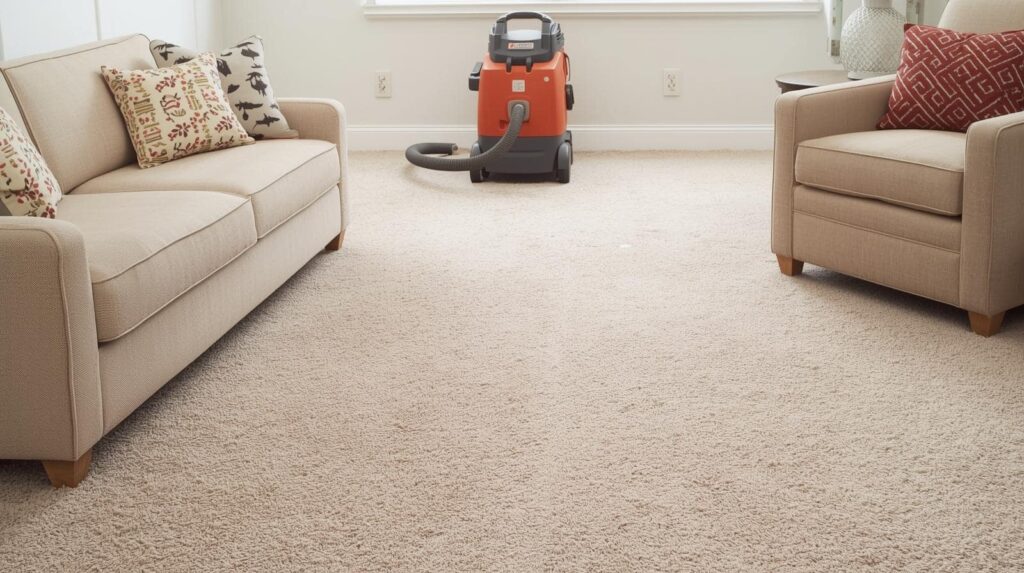
The fabric code decides everything
Before anything touches your furniture we find the manufacturer’s cleaning code, usually on a tag under a cushion or on the frame beneath the skirt. There are four, and they are not a suggestion.
W means water-based cleaning is safe. The most common code on modern furniture and the most straightforward.
S means solvent only. Water will stain, shrink or ring this fabric. Many rayons, silks and some linens carry it, and this is where most home cleaning attempts go wrong: a water-based spot cleaner on an S-coded fabric leaves a permanent ring that is more visible than the original spot.
WS means either method is acceptable, which gives us room to choose based on what the soil actually is.
X means vacuum only. No water, no solvent, no home remedy. Usually delicate or heavily textured fabrics. On an X-coded piece we will vacuum it properly and tell you honestly that there is nothing more we can safely do.
If the tag is gone, which it often is on older or secondhand furniture, we test an inconspicuous area before committing to a method. We have written the full detail at upholstery fabric codes W, S, WS and X.
Why upholstery is different from carpet
Carpet sits on a pad over a floor. Upholstery sits on foam, batting and a frame, and all three hold water. Over-wetting a sofa does not just take longer to dry, it can wick soil up out of the foam into the fabric as it dries, leaving the piece looking worse than before, and in the worst case it can promote mould inside the cushion where nobody can see it.
That matters more in an Anchorage winter than it sounds. A sealed house with low air exchange dries things slowly. Our method is low-moisture and extraction-heavy for exactly that reason, and we would rather make two passes than put too much water in once.
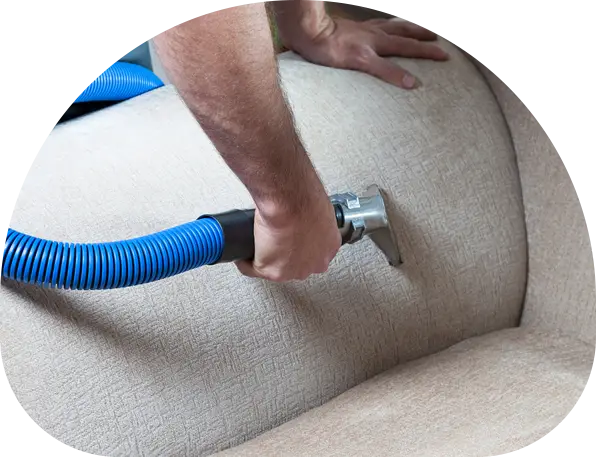
What comes out and what does not
Body oil is the main thing. Headrests, armrests and the front edge of seat cushions darken from skin contact and hair product, and because it builds gradually most people stop noticing until it is cleaned and they see the difference against an unused area.
Food, drink and general soil usually come out. Pet oil and odour usually improve substantially, and for urine specifically the right service is pet stain and odour removal, because urine in a cushion needs a different treatment than cleaning.
Some things do not come out, and we would rather say so before we start: dye transfer from denim or a throw onto a light fabric, sun fading, ink, and anything that has already been treated with the wrong product by someone else. Previous spot-cleaning attempts are the most common reason a stain is permanent, because the wrong chemistry can set it.
Leather is handled differently again, and leather care through the heating season is where most damage is avoided.
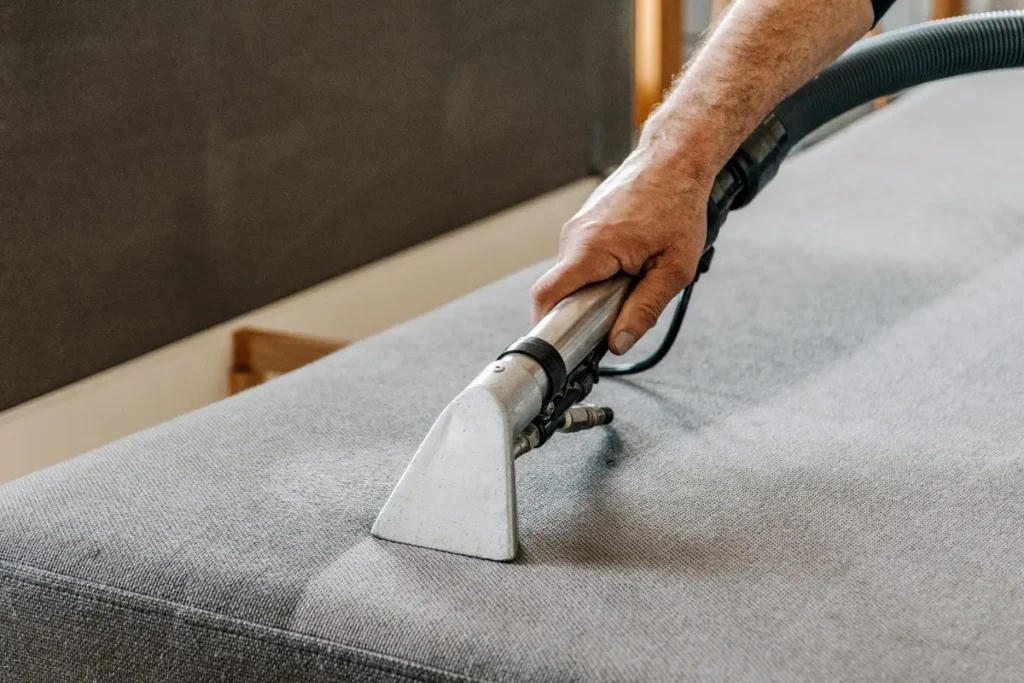
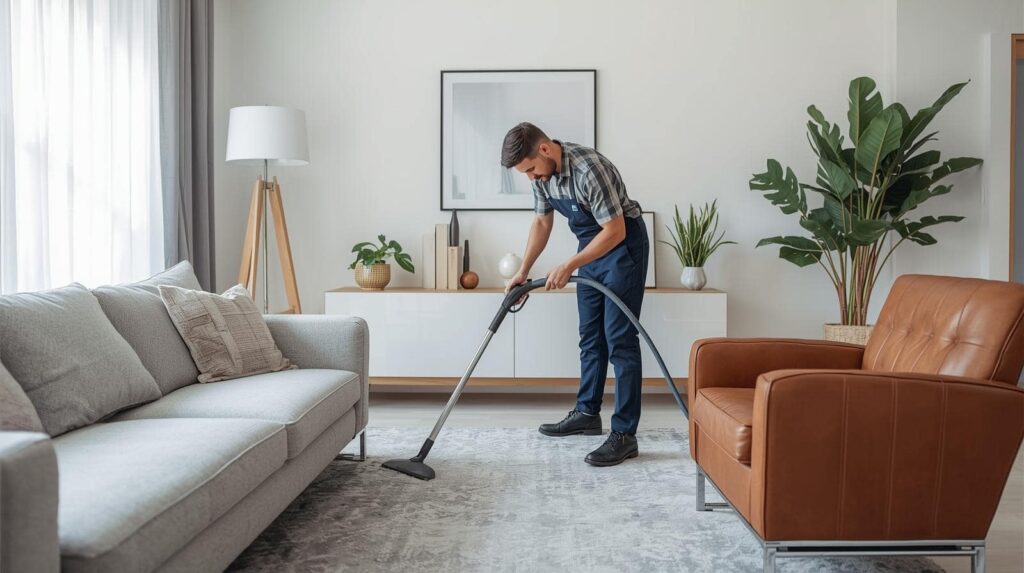
Protection after cleaning
Cleaned fabric has no barrier on it. A protector gives you time between a spill and a stain, which in practice is the difference between blotting something up and living with it.
We offer SuperShield fabric protector and MicroSeal fabric protection. Both go on after cleaning. It is worth asking about on anything light-coloured, anything in a household with children or pets, and anything you have just paid to have cleaned.
What else usually needs doing at the same time
Most households book upholstery alongside something else, and it is usually cheaper and less disruptive in one visit. Carpet cleaning in the same rooms, mattress cleaning in the bedrooms, and for allergy households the anti-allergen treatment on the soft surfaces.
If you want the general background, we have written everything you need to know about upholstery cleaning.
Our Process

3. Cleaning.
We apply the method matched to your fabric, whether that's hot water extraction, low-moisture cleaning, or leather-specific care.

4. Drying
.Furniture needs airflow to dry properly. We position fans as needed to speed this along.

5. Final check.
We walk through the piece with you if you're home, and point out anything that needs follow-up attention.

1. Inspection.
We check fabric type, existing stains, and overall condition, and note any areas that need extra attention.
2. Pre-treatment.
Visible stains and odor sources get treated before general cleaning begins.

Book upholstery cleaning
Tell us what pieces you have and, if you can find it, what the fabric code says. If you cannot find the tag, that is fine and we will check on site. Get in touch or request a quote.
Got Questions? We’ve Got Answers
Frequently Asked Questions

How much does couch cleaning cost?
Cost depends on the size of the piece, fabric type, and condition. We give you a quote up front once we know what we’re cleaning, so there are no surprises.
How long does it take for upholstery to dry after cleaning?
Most upholstery dries within a few hours up to overnight, depending on the fabric, the cleaning method used, and airflow in the room. Low-moisture methods dry faster than hot water extraction.
Is upholstery cleaning safe for kids and pets?
Yes. We use cleaning products that are safe once dry, and we’re happy to discuss the specific products used if you have allergy or sensitivity concerns.
Do you clean leather furniture the same way as fabric?
No. Leather requires different cleaning agents and conditioning applied by hand, not the extraction methods used on fabric upholstery. We treat leather as its own category.
Can you get pet odor out of a couch?
Often, yes. We treat pet odor at the source in the fabric and padding rather than masking it. How long the odor has been there and how deep it’s set affects the outcome, which we’ll assess when we look at your furniture.