

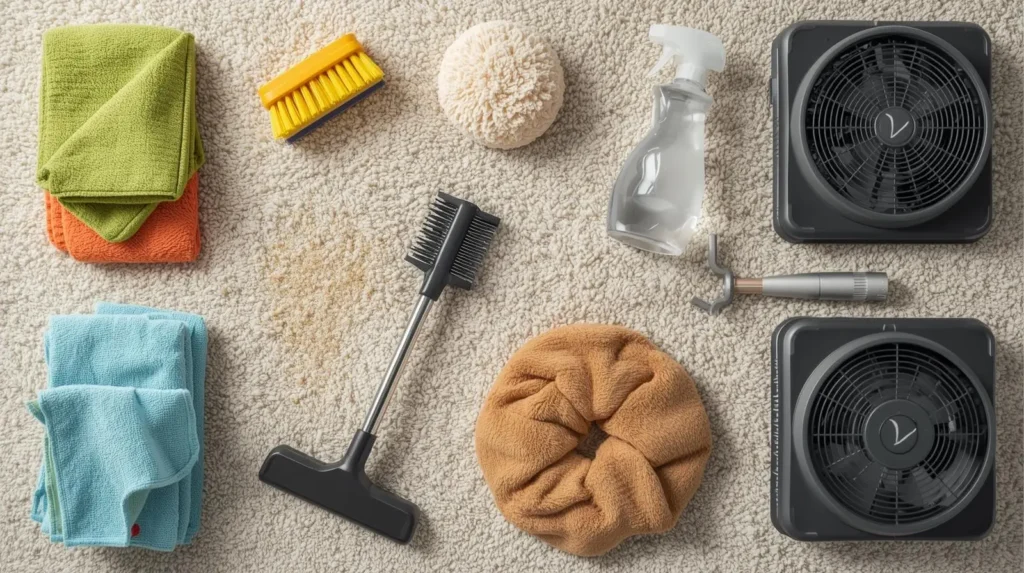
A practical, low-clutter kit that helps you clean effectively without leaving residue or soaking the pad
Most people buy carpet cleaning supplies in reaction to a stain. They grab a strong-smelling spray, scrub hard, and hope for the best. The problem is that carpet cleaning isn’t about having a shelf full of products—it’s about having the right few supplies that let you do three things well:
- Lift material out of the carpet instead of pushing it deeper
- Control moisture so you don’t soak the backing and pad
- Remove residue so the spot doesn’t re-soil or wick back later
A smart home kit is less about “more products” and more about the right tools for blotting, rinsing, extracting, and drying. This guide breaks down the carpet cleaning supplies that actually matter for most homes, what each item is for, and what to avoid if you want clean results that stay clean.
Think in functions, not bottles
Before listing supplies, it helps to organize them by the job they do. Most carpet cleaning success comes down to five functions:
- Blotting and absorption (pulling liquid up)
- Controlled rinsing (diluting without flooding)
- Agitation (lifting soil gently from fiber tips)
- Extraction (removing dirty solution)
- Drying (preventing odor, wicking, and re-soiling)
If your supplies cover these functions, you can handle most spills and routine maintenance without turning the carpet into a wet mess.
Must-have carpet cleaning supplies for spills and spots
These are the core items that do most of the work. They’re inexpensive, easy to store, and solve the biggest carpet-cleaning problems: rubbing, over-wetting, and residue.
1) White absorbent towels or paper towels
Why white matters: colored towels can transfer dye, especially when damp.
What they’re for:
- Blotting spills immediately
- Pressing moisture out during the “final dry press”
- Avoiding friction that frays fibers
Best practice:
- Use pressure (press and hold) rather than rubbing
- Rotate to a clean section often
- Stop when the towel stops picking up liquid
2) A spray bottle for clean water
This is one of the most useful supplies because it prevents the most common mistake: pouring water directly onto carpet.
What it’s for:
- Light misting for controlled dilution
- Small rinse passes that reduce residue
- Avoiding flood cleanup
Why it matters:
A spray bottle lets you add moisture in small, repeatable cycles instead of soaking the area.
3) Two bowls or buckets
This sounds basic, but it’s one of the easiest ways to keep cleaning controlled.
What they’re for:
- One bucket for clean rinse water
- One bucket for wringing out dirty towels
This prevents you from reapplying dirty water back to the carpet, which creates streaking and “why does it still look bad?” frustration.
4) A soft, carpet-safe brush
Scrubbing is a problem. Gentle agitation can help when used correctly.
What it’s for:
- Lightly lifting soil from the top of fibers
- Working a low-residue product evenly (if used)
- Avoiding fiber distortion
What to avoid:
- Stiff bristles
- Aggressive back-and-forth scrubbing
- Wire brushes or anything designed for hard floors
A good brush supports controlled cleaning instead of damage.
5) A wet/dry vacuum or small extraction tool
If you want one “upgrade” item for home carpet care, it’s something that removes liquid better than towels alone.
What it’s for:
- Pulling rinse water out of fibers
- Reducing drying time
- Lowering the chance of wicking and odor
Why it matters:
Carpet problems persist when moisture stays in the pad. Extraction reduces that risk.
You don’t need a commercial machine. A basic wet/dry vac can make a noticeable difference in how clean and dry the carpet ends up.
6) A fan (or two)
Drying is not optional. It’s one of the main differences between a spot that stays clean and a spot that comes back.
What it’s for:
- Fast drying after spot cleaning
- Reducing odor risk
- Preventing wicking
Best practice:
Aim airflow across the surface (sideways flow) rather than blowing straight down.
7) A quality vacuum with a functioning beater/brush roll
A lot of “carpet looks dirty” is actually a vacuum problem, not a cleaning problem.
What it’s for:
- Removing dry soil before it becomes embedded
- Keeping traffic lanes from turning gray
- Preventing the need for heavy cleaning later
A good vacuum schedule is one of the most effective carpet-care moves you can make.
Optional carpet cleaning supplies that help in specific situations
These aren’t required for every home, but they’re useful depending on your carpet and lifestyle.
1) A crevice tool and edge-cleaning attachments
Edges trap soil. If you ignore edges, carpets look uneven.
Useful for:
- Baseboards
- Corners
- Under furniture lines
- Entry transitions
2) A carpet rake or grooming brush
This is more about appearance than cleaning power, but it can help after cleaning.
Useful for:
- Resetting pile direction
- Reducing visible “clean paths”
- Helping carpet dry more evenly
3) A dehumidifier
Helpful in:
- Rooms with limited airflow
- Cooler seasons when drying is slower
- Homes where pet odors linger
Drying speed is one of the biggest predictors of whether odors stick around.
4) A handheld spot extractor
A small spot extractor can be useful for homes with frequent spills or pets.
Useful for:
- Repeated spot work without over-wetting
- Better extraction than towels alone
- Faster recovery after accidents
What “cleaning products” belong in a home kit
You asked for carpet cleaning supplies, and supplies aren’t only liquids. But most people will keep at least one or two products on hand. The key is choosing products that clean without leaving residue and that match common household needs.
A low-residue spot cleaner
Look for:
- Clear instructions
- Easy rinse-ability
- No heavy soap feel left behind
Why it matters:
Residue attracts soil. Many spot cleaners make a stain “look gone” but leave a sticky patch that darkens quickly.
An odor-focused product for pet homes (if relevant)
If you have pets, odor is often the real issue. A product designed for odor control is different from a general spot spray.
Look for:
- Products designed for organic odors
- Clear directions that emphasize controlled use
- Something that doesn’t rely on fragrance alone
The goal is addressing the source, not masking it.
A neutral rinse option
Sometimes the best “product” is simply clean water applied correctly. A spray bottle and controlled blotting cycles can do more than harsh chemical sprays for many spills.
Carpet cleaning supplies that help prevent the “stain came back” problem
The “stain came back” complaint usually comes from wicking or residue. Your supplies can prevent both if they support extraction and drying.
The most useful items for preventing return stains are:
- Absorbent towels (for strong press-and-lift blotting)
- A spray bottle (to control moisture)
- A wet/dry vacuum or extractor (to remove rinse water)
- Fans/dehumidifier (to dry fast)
If you only improve one part of your kit, improve the ability to remove moisture and dry quickly.
What to avoid buying, even though it’s common
Some supplies are popular because they’re marketed well, not because they’re helpful.
Highly foaming carpet shampoos
Foam can look satisfying, but it often leaves residue if not extracted properly.
Strongly scented sprays as a “solution”
Fragrance doesn’t equal removal. It can also make it harder to tell whether odor remains.
Harsh brushes and aggressive scrub tools
These can permanently distort fibers and create a fuzzy patch that looks different than the surrounding carpet.
“One product fixes everything” cleaners
Different stains need different approaches. A single universal product often means compromises, and compromises usually show up as residue, fading, or incomplete removal.
A simple home setup that covers most needs
If you want a practical list you can keep in a closet, this covers most spills and routine care:
- White towels or paper towels
- Spray bottle (clean water)
- Two buckets/bowls
- Soft carpet brush
- Wet/dry vacuum or handheld extractor (if possible)
- One or two fans
- A quality vacuum with attachments
- A low-residue spot cleaner (optional)
- Odor-focused product if you have pets (optional)
This kit handles most real-life situations without clutter.
The most useful carpet cleaning supplies at home aren’t the loudest-smelling sprays or the strongest scrub brushes. They’re the tools that let you blot instead of rub, control moisture instead of flooding, remove residue instead of leaving soap behind, and dry fast so odors and wicking don’t become long-term problems.
When your supplies support those fundamentals, you’ll find that many “hard stains” become much more manageable—and your carpet stays more consistent between deeper cleanings.