

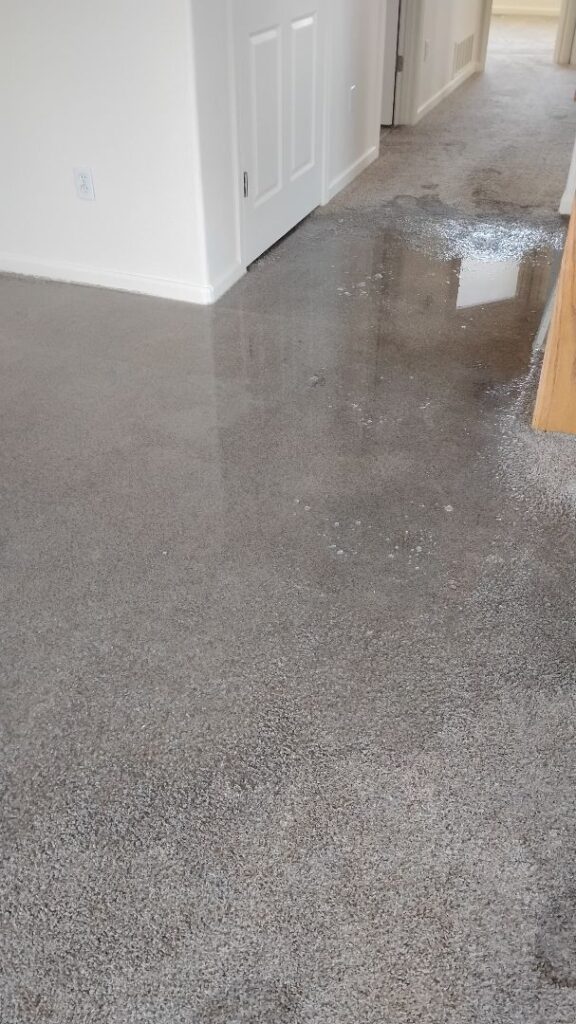
Two houses. Same amount of water on the floor, same square footage affected, same flooring. One job takes four days and saves nearly everything. The other takes ten days, removes half the materials in the room, and runs under containment the whole time. The difference is Category 3 water damage in one house and clean supply water in the other.
Classification is not paperwork. It is the decision that drives everything downstream: what can be dried in place, what has to come out, what protective measures the crew works under, and how long the whole thing takes. Homeowners rarely hear it explained, and it is the single most useful concept for understanding why a restoration scope looks the way it does.
The reference framework the restoration trade works to is the IICRC S500 standard for professional water damage restoration. It defines the categories below and the class system that sits alongside them.
Category 1: clean water
Water from a sanitary source that does not pose a substantial risk when it leaves that source. Broken supply lines, water heater intake failures, a burst pipe carrying potable water, melting ice from a clean source, rainwater entering through a roof or window without contacting contaminants on the way in.
This is the most recoverable situation. Structural materials can often be dried in place, flooring and pad frequently survive, and the work is straightforward extraction and drying without special containment.
The important qualifier: Category 1 describes the water at the moment it left the source. It does not describe the water on your floor two days later.
Category 2: significantly contaminated
Water carrying enough contamination that contact with it is undesirable. Dishwasher or washing machine discharge, water from a toilet bowl containing urine but no solid waste, water from a failed sump, and water that has passed through a building assembly and picked up whatever was in it.
Sometimes called gray water, which is an informal term rather than a technical one.
Handling changes here. Porous materials that hold water and cannot be effectively cleaned are far more likely to be removed rather than dried. Antimicrobial application becomes part of the process. The crew works with protective equipment and controls what leaves the affected area.
Category 3: grossly contaminated
Water containing pathogenic, toxigenic or otherwise harmful agents. Sewage and any toilet backflow containing solid waste. Water from beyond the trap on a drain line. Rising ground water and surface flooding from rivers, creeks or standing water outdoors. Seawater. Any water that has been in contact with the ground.
The job becomes a controlled operation. Containment and negative air. Full protective equipment. Removal rather than drying for essentially all porous materials in the affected area, including drywall, insulation, particleboard and soft flooring assemblies. Structural cleaning of what remains. Disposal handled deliberately.
This is expensive in labor and materials, and it is not optional. A Category 3 loss dried like a Category 1 loss is a Category 3 loss with dry building materials in it.
On health specifically, this article stays in its lane. Contamination classification is a building and materials framework. Questions about health effects belong with a physician or public health authorities, not with a restoration contractor.
Categories deteriorate. This is the part people miss
Category is not fixed at the moment of the loss. It is assessed at the moment of the assessment, and it moves in one direction.
Clean supply water sitting on a floor for two days in a warm house is no longer clean supply water. It has been in contact with flooring, adhesive, dust, subfloor, whatever was on the ground, and it has been at a temperature that supports biological activity the entire time. Time, temperature and contact are the three variables, and all three work against you.
This is the strongest practical argument for calling immediately rather than waiting a couple of days to see how bad it is. Waiting does not just make the job longer. It can change the category, and changing the category changes what you get to keep.
Class is a separate question
People conflate the two and they measure different things. Category describes how contaminated the water is. Class describes how much water is in the structure and how hard it will be to get out.
Roughly: a small amount of absorption into a limited area at one end, through to water that has saturated a large proportion of the affected materials, through to situations where water is trapped in materials with low permeance, such as hardwood assemblies, plaster, concrete or a wall cavity behind an intact vapor barrier. That last situation is the specialty drying case, and in Alaska construction it is common rather than exotic.
A job can be Category 1 and still be difficult, because the water went somewhere hard to reach. It can also be Category 3 and small. The two axes are independent and both go on the paperwork.
The Alaska specifics
Three local situations change classification more often than people expect.
Breakup groundwater. Spring meltwater entering a crawlspace or basement has been in contact with the ground. That places it in Category 3 by definition, regardless of how clear it looks. Clear is not the same as clean, and this is the single most common misunderstanding we deal with in April.
Septic systems in outlying areas. Properties outside the sewer network add a failure mode that produces Category 3 water directly, and a system stressed by frozen ground or saturated soil during breakup is a system more likely to back up.
Long running winter losses. A supply line that failed in an empty house and ran for four days started as Category 1. By the time anyone arrives, it has spread through assemblies, picked up contaminants, and sat at whatever temperature the house was holding. It gets assessed on what it is now.
The gap between where water started and where it ended up is the same problem described in hidden moisture rather than visible water, and the distinction between a flood event and a plumbing loss is covered in the difference between flood and water damage restoration.
What this means for what you keep
In Category 1, most things stay. Structural drying does the work, flooring often survives, and removal is limited to what the readings say cannot be dried in the time available.
In Category 2, porous materials become questionable. The decision runs on whether the material can be cleaned effectively as well as dried, and many cannot.
In Category 3, porous materials in the affected zone go. Non porous and semi porous surfaces are cleaned. Contents are triaged: hard surfaces cleanable, absorbent items generally not.
This is why two visually identical losses produce completely different scopes, and why a scope that removes flooring and drywall is not automatically an overreach. It is also why the category designation should appear in your documentation from day one rather than being applied retrospectively.
What to ask
Ask what category the loss has been assessed as, and what the reasoning is. Ask whether that assessment could change, and what would change it. Ask what is coming out and why, specifically, rather than generally.
A crew that can answer those three questions in plain language is a crew that knows what it is doing. A crew that treats the question as an inconvenience is telling you something useful.
The immediate steps after any loss are in what to do with water damage. Our emergency work runs through flood and water restoration, the repair phase through flood damage repair and restoration, and more restoration writing sits in the restoration archive. If you have water in the building and are unsure what you are dealing with, reach us here or call (907) 215-2503.
Frequently asked questions
What is Category 3 water?
Water containing pathogenic, toxigenic or otherwise harmful agents. That covers sewage and toilet backflow with solids, water from beyond the trap on a drain line, seawater, rising ground water, and surface flooding from outdoors. Any water that has been in contact with the ground falls into this category regardless of how clear it looks.
Can Category 1 water become Category 3?
Yes, and it commonly does. Category describes the water at the time of assessment, not at the time of the failure. Time, temperature and contact with building materials and soil all degrade it. Clean supply water left standing for a couple of days in a warm house is no longer assessed as clean.
Does Category 3 water mean everything has to be thrown out?
Not everything, but porous materials in the affected zone generally come out rather than being dried, including drywall, insulation, particleboard and soft flooring assemblies. Non porous and semi porous surfaces are cleaned. Contents are triaged, with hard surfaces usually cleanable and absorbent items usually not.
Is crawlspace groundwater during breakup Category 3?
Meltwater that has been in contact with the ground is classified as grossly contaminated, yes, even when it looks perfectly clear. This is the most frequent point of disagreement we encounter in spring, and clarity of the water is not the test.
Who decides what category a loss is?
The responding restoration technician assesses it on site, based on the source, the elapsed time, what the water has contacted and the conditions in the building, working to the IICRC S500 framework. It should be recorded in the documentation on day one, with reasoning, rather than assigned later to justify a decision already taken.